
A keepsake voice card is for a recording you do not want to lose: a grandmother's story, a voicemail, a child's first words. The card carries a QR code; scanning it plays the recording in the browser. Two designs: an archive record card with metadata lines and a black bar, and an ivory card where the words are embossed and only the code is printed. Both sit well on the back of a frame, inside a memory box or next to a photo at a memorial.
Templates
Pick a style, add your logo and details, download print-ready.
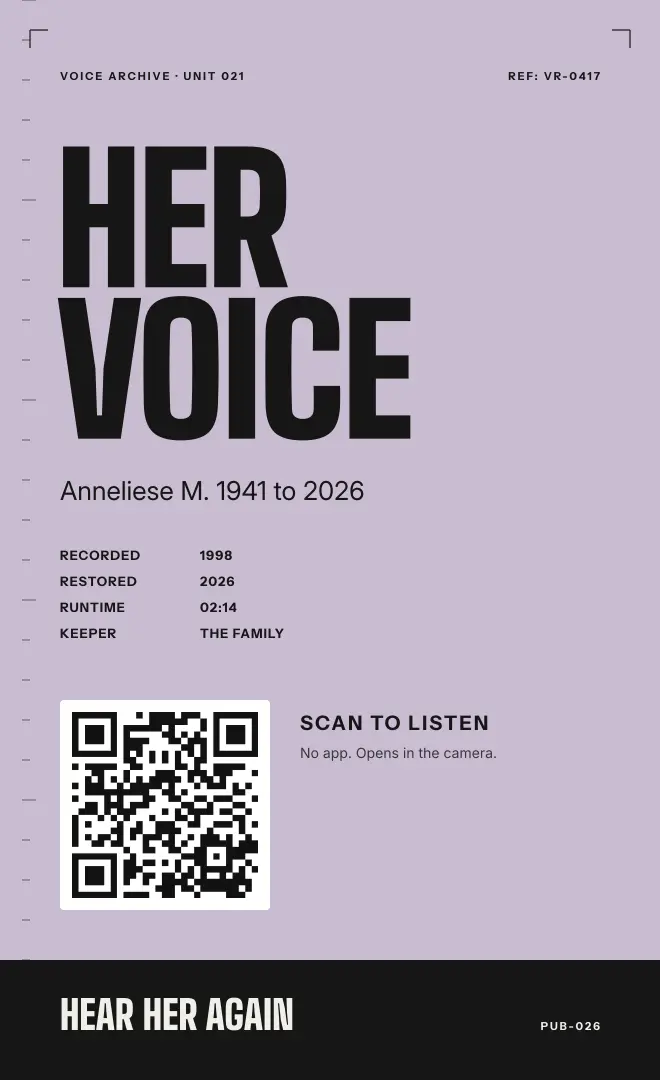
Her voice (archive card)
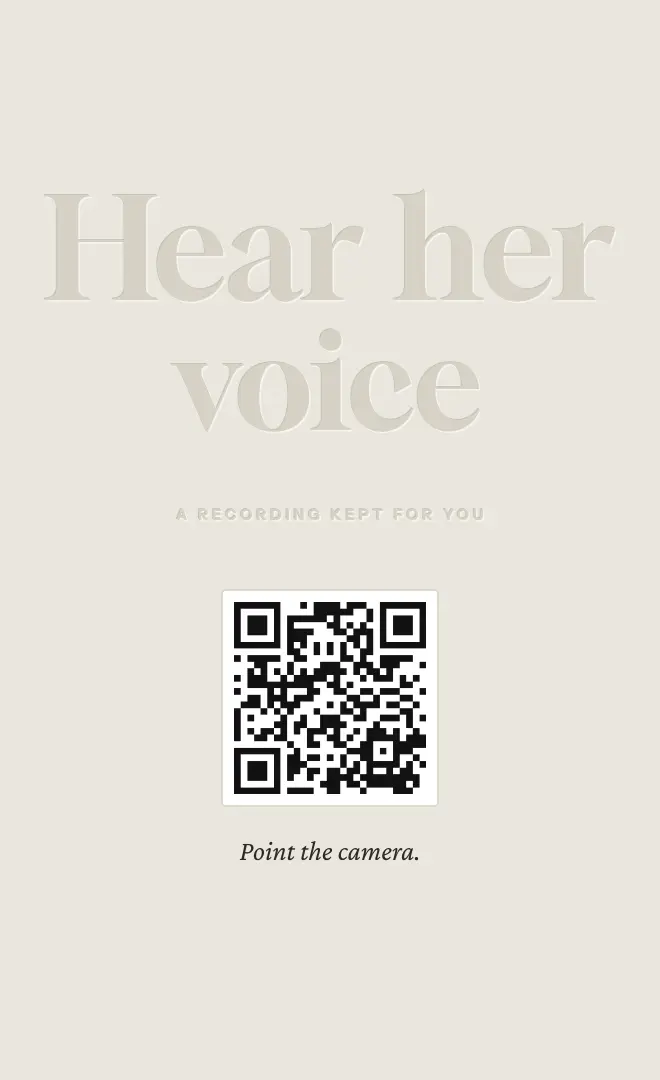
Blind emboss (ivory)
How it works
Make an audio code first: upload the recording or record it in the browser, save the code and copy its short link from My codes. A permanent code never goes inactive, which matters for a keepsake.
Pick the archive card or the embossed card, paste the link, write the name line and the dates.
Download a print ready PNG or EPS. For the embossed card, a print shop can blind emboss the large words; the QR prints in black.
Where it works
Memorials
A card beside the photo at the service. People scan and hear the person speak.
Family archive
One card per recording in the memory box, with recorded and restored dates on the card.
Behind the frame
A card taped to the back of a framed photo plays the story of the day it was taken.
Frequently asked
Will the code keep working for years?
A permanent audio code has no inactivity rule and no renewal, for as long as qrforprint operates. Keep your own copy of the recording as well.
Can several recordings sit behind one card?
Yes, on a permanent code: up to ten recordings behind one code, each with its own name.
Can I write the dates by hand instead?
Yes. Leave the name line empty and the space stays clear on the embossed card.